
 Connect Sign In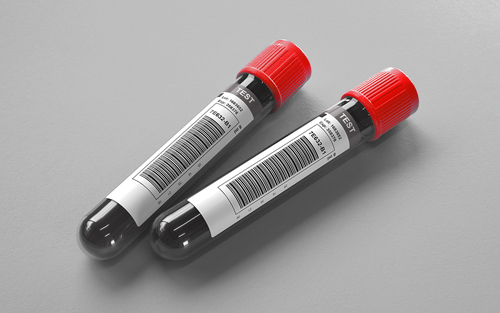















UGT1A1 Sequencing
Ordering Recommendation
Preferred test to confirm diagnosis of Gilbert (benign familial hyperbilirubinemia) or Crigler-Najjar syndrome. May be used when prescribing atazanavir to assess likelihood of bilirubin-related discontinuation. May also be useful in dosage planning for individuals who will receive high-dose irinotecan or experience neutropenia while receiving irinotecan.
New York DOH Approval Status
Specimen Required
Lavender (EDTA) or yellow (ACD solution A or B).
New York State Clients: Lavender (EDTA)
Transport 3 mL whole blood. (Min: 2 mL)
Refrigerated.
Serum or plasma, grossly hemolyzed or frozen specimens
Ambient: 72 hours; Refrigerated: 2 weeks; Frozen: Unacceptable
New York State Clients: Preferred Ambient: 4 days; Refrigerated: 4 days; Frozen: 4 days
Specimens are preferred to be received within 4 days of collection. Extraction will be attempted for specimens received after 4 days, and DNA yield will be evaluated to determine if testing may proceed.
Methodology
Massively Parallel Sequencing
Performed
Varies
Reported
10-15 days
Reference Interval
Refer to report
Interpretive Data
Refer to report.
Laboratory Developed Test (LDT)
Note
Gene Tested: UGT1A1 (NM_000463), promoter (NC_000002)
Deletion/duplication analysis is not available for this gene.
When testing cord blood specimens, the presence of maternal cell contamination (MCC) is possible, which may impact result interpretation. If clinically warranted, testing for MCC is available, at a charge, through ARUP Laboratories.
Hotline History
Hotline History
CPT Codes
81404
Components
| Component Test Code* | Component Chart Name | LOINC |
|---|---|---|
| 3004387 | UGT1A1 Specimen | 66746-9 |
| 3004388 | UGT1A1 Interp | 93844-9 |
Aliases
- Atazanavir prescribing
- Crigler-Najjar syndrome type I or II
- Gilbert syndrome
- Irinotecan toxicity
- pharmacogenetics
- pharmacogenomics


